AYN Thor review: price, specs, pros and cons for dual-screen fans
Our AYN Thor review covers price, specs, pros, cons, weight, software trade-offs, and whether this $249 dual-screen Android handheld is actually better than the Odin 2 Mini or Retroid Pocket 5.
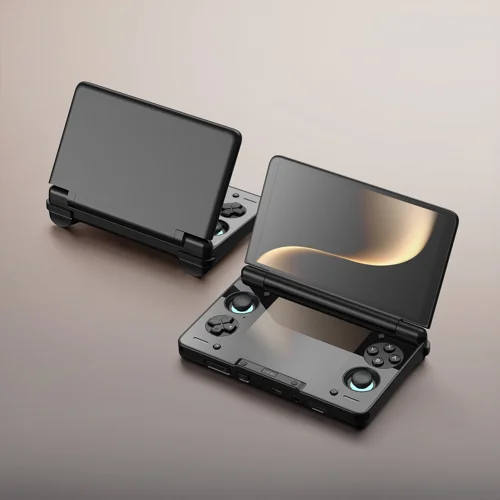
An AYN Thor review almost writes itself if you only look at the headline specs. Snapdragon 8 Gen 2. Dual screens. Clamshell design. $249. In a market full of safe Android handhelds, this thing stands out immediately.
Then you spend a little more time with the idea of actually owning one, and the easy enthusiasm starts to fade.
The Thor is not a generic recommendation. It is a device for a very specific buyer: someone who cares enough about DS and 3DS-style play to accept extra setup, extra weight, and a more awkward daily experience in exchange for a form factor that almost nobody else is trying.
That tension is the whole story.
The AYN Thor specs page looks strong. The real question is whether the trade-offs are worth living with once the novelty wears off.
TL;DR
- The AYN Thor stands out because of its dual-screen clamshell design, not because it wins a raw spec contest.
- The Snapdragon 8 Gen 2 gives it plenty of headroom. Performance is not the main issue.
- The real trade-offs are setup friction, weight, software fit, and whether you genuinely need the second screen.
- If DS and 3DS-style play is your whole reason for shopping, the Thor makes sense.
- If you just want a great Android handheld, the Odin 2 Mini and Retroid Pocket 5 are easier buys.
Specs at a glance
| AYN Thor | |
|---|---|
| Price | $249 |
| Chip | Snapdragon 8 Gen 2 |
| RAM | 8GB / 12GB / 16GB LPDDR5X |
| Storage | 128GB / 256GB / 1TB + microSD |
| Main screen | 6.0” AMOLED, 1920×1080 |
| Secondary screen | 3.92” touchscreen |
| Battery | 6000mAh |
| Weight | 380g |
| Form factor | Clamshell |
What makes the Thor different
Most Android handhelds are trying to solve the same problem: give you enough power for PS2, GameCube, PSP, Android games, and maybe a little more, all inside a familiar landscape body.
The Thor is doing something else.
It is chasing the feeling that made the DS and 3DS special. Not the nostalgia part. The functional part. Two screens. A device that closes shut. A layout that makes some games feel instantly more natural.
That is the whole pitch.
If that pitch lands on you, the Thor feels fresh in a market full of increasingly similar black rectangles. If it does not, the Thor starts to look like an expensive detour.
The chip is not the story
The Snapdragon 8 Gen 2 is overqualified for most retro use.
That is good news, but it is not the interesting news. Nobody is going to look at the Thor and complain that it lacks horsepower for PS2, GameCube, Dreamcast, PSP, or demanding Android games. It has enough room to breathe.
What keeps coming up instead is a more annoying question: what do you get from all that power that a conventional handheld does not already give you?
The answer is simple. You get a second screen, a clamshell form factor, and the possibility of a better DS and 3DS-style experience.
That answer is either enough for you or it is not.
Where the Thor starts to feel complicated
This is the part people skip when they are still in the honeymoon phase.
A device like this asks more from you than a standard handheld. Not always in a catastrophic way. Sometimes it is just little things piling up.
You have to think about software setup. Screen layouts. Frontend behavior. Which apps actually make good use of the second screen and which ones merely tolerate it. A dual-screen device is not only hardware. It is workflow.
That is why the Thor does not read like a casual recommendation.
If you enjoy tinkering, the Thor gets more attractive. If you want something that feels sorted and obvious from day one, it gets less attractive fast.
It still is not a real 3DS replacement
This is the trap a lot of buyers fall into.
The Thor looks like the modern answer to the 3DS. In some ways, it is. You get far more power, a better main display, Android flexibility, and a form factor that at least points in the same direction.
But replacement is a strong word.
A real DS or 3DS experience is not only about having two screens. It is also about ergonomics, software behavior, sleep-and-resume convenience, screen proportions, and how natural each game feels on original-style hardware.
The Thor can be better in raw capability and still feel less seamless in actual use.
That does not make it a bad product. It just means you should stop shopping for a miracle device and start shopping for the compromise you can live with.
The hidden cost is not the price
At $249, the Thor is not cheap, but the sticker price is only part of the story.
The more important cost is attention.
A conventional handheld asks for less of it. You buy it, set up your apps, and get on with your life. The Thor keeps inviting more decisions. More layout tweaks. More fiddling. More comparison between what is possible and what is actually comfortable.
Some people love that. They want the toy and the project.
Other people think they want that, then get tired after the third round of setup and start wondering why they did not just buy the simpler thing.
AYN Thor vs Odin 2 Mini vs Retroid Pocket 5
This is where the Thor has to defend itself against more rational competitors.
| Device | Price | Chip | Screen | Weight | Best fit |
|---|---|---|---|---|---|
| AYN Thor | $249 | Snapdragon 8 Gen 2 | 6.0” AMOLED + 3.92” secondary touchscreen | 380g | People who specifically want dual-screen play |
| AYN Odin 2 Mini | $249 | Snapdragon 8 Gen 2 | 5.98” AMOLED | 260g | People who want flagship power in a normal shape |
| Retroid Pocket 5 | $199 | Snapdragon 865 | 5.5” AMOLED | 280g | People who want the strongest value pick |
Why the Odin 2 Mini is the Thor’s hardest comparison
Same price. Same class of chip. Less drama.
That is the problem.
If you do not care deeply about the second screen, the Odin 2 Mini starts looking like the cleaner answer. It gives you flagship Android handheld performance without asking you to justify a stranger design.
Compare AYN Thor vs Odin 2 Mini →
Why the Retroid Pocket 5 keeps showing up in the conversation
Because $199 is a very annoying number when the Thor costs $249.
The Retroid Pocket 5 is not trying to be special in the same way, but it is one of those devices that makes you question how much novelty you are really paying for. For many buyers, it will do enough, cost less, weigh less, and ask for fewer explanations.
Compare AYN Thor vs Retroid Pocket 5 →
That is why the Thor only really wins when its form factor is the main thing you came for.
Weight matters more than the spec sheet suggests
The Thor is listed at 380g in our device data.
That is a real number. Not a rounding error. Not something you hand-wave away because the design is cool.
For reference, the Odin 2 Mini sits at 260g and the Retroid Pocket 5 at 280g.
Plenty of people will happily accept the extra weight because the Thor is doing something unusual. But if your idea of a handheld is something you pick up casually for short sessions, the Thor is less effortless than it first appears.
That does not kill it. It just makes it feel more deliberate.
Who should actually buy the AYN Thor?
Buy it if:
- you specifically want a modern dual-screen handheld
- DS and 3DS-style play is a major part of your use case
- you do not mind Android setup and experimentation
- you like hardware that feels a little weird and a little special
Skip it if:
- you want the easiest setup possible
- you mostly play single-screen systems
- you are sensitive to weight or hardware quirks
- you keep hoping it will be a perfect 3DS replacement
FAQ
Is the AYN Thor worth it?
Yes, but only for a narrow kind of buyer. If the second screen is the reason you are here, the Thor makes sense. If you just want a powerful Android handheld, there are cleaner options.
Is the AYN Thor better than the Odin 2 Mini?
Not by default. They cost the same and sit in the same performance class. The Thor only pulls ahead if you genuinely value the dual-screen format.
Is the AYN Thor better than the Retroid Pocket 5?
It is more ambitious, not automatically better. The Thor has more power and a more unusual design. The Retroid Pocket 5 is cheaper and easier to justify for general use.
Is the AYN Thor a good DS or 3DS handheld?
Potentially, yes. That is the best reason to care about it. Just do not confuse “good for that use case” with “perfect replacement for original hardware.”
Final verdict
What I like about the AYN Thor is that it is not bland.
It is trying to do something specific in a market that often feels too safe. That alone gives it some charm.
What gives me pause is that charm is doing a lot of the work.
The Thor makes the most sense when the second screen is not a bonus, but the whole reason you opened the tab in the first place. In that case, the compromises start to feel fair. The weight makes sense. The setup effort makes sense. Even the price starts to make sense.
If that is not you, the Thor turns from “interesting” to “hard to defend” surprisingly quickly.
So the verdict is simple.
The AYN Thor is a smart buy for the right person. It is not the default recommendation.
Related reading
If you are still deciding, these pages will help narrow it down:
- AYN Thor full specs
- AYN Odin 2 Mini full specs
- Retroid Pocket 5 full specs
- Retroid Pocket 5 vs AYN Odin 2 Mini
- Check AYN Thor screen fit
Quick links
- AYN Thor specs →
- AYN Odin 2 Mini specs →
- Retroid Pocket 5 specs →
- Check screen fit →
- Compare AYN Thor vs Odin 2 Mini →
- Compare AYN Thor vs Retroid Pocket 5 →
Editor note
This piece is an editorial synthesis based on recent public discussion around the AYN Thor and Scanline device data. It is meant to help with buying context, not to replace a full lab-style hands-on review.
Screen Fit Analysis
See how devices mentioned in this article handle popular platforms: